
Uncategorized
The Essential Guide to the Role of Nicotine Strengths

Nov
Over half of adult vapers admit they cannot correctly identify the nicotine strengths in their chosen products. When labels and numbers feel confusing, the risk of using too much or too little nicotine climbs. Selecting the right nicotine concentration not only shapes personal satisfaction but also helps manage health and safety. This guide breaks down what nicotine strengths mean, why they matter, and how to confidently choose levels that fit your needs.
Table of Contents
- Nicotine Strengths Defined And Their Importance
- Types Of Nicotine Strengths In Vaping Products
- How Nicotine Levels Affect User Experience
- Safety, Health Risks, And Best Practices
- Legal Regulations Of Nicotine Strengths In Europe
Key Takeaways
| Point | Details |
|---|---|
| Understand Nicotine Strengths | Familiarize yourself with the range of nicotine concentrations to select the right strength for your vaping experience. |
| Start Low and Adjust Gradually | Begin with lower nicotine levels and increase gradually based on personal tolerance and comfort. |
| Pay Attention to Product Labeling | Always check for clear nicotine concentration indicators to avoid confusion and ensure safe use. |
| Know the Regulations | Be aware of the legal nicotine strength limits and labeling requirements in your region to ensure compliant consumption. |
Nicotine Strengths Defined and Their Importance
Nicotine strength represents the concentration of nicotine in vaping products, measured typically in milligrams per milliliter (mg/ml) or as a percentage. Understanding these measurements is critical for consumers seeking a personalized and controlled nicotine experience. According to research published in PubMed, many adults struggle to accurately interpret nicotine concentrations, highlighting the importance of clear and standardized labeling.
Typical nicotine strength ranges vary widely, generally spanning from 0mg (nicotine-free) to 50mg/ml for high-concentration products. Nicotine concentration directly impacts user experience, affecting factors like throat hit, satisfaction level, and potential nicotine absorption. Lower strengths (3-6 mg/ml) suit light smokers or those transitioning away from traditional cigarettes, while higher concentrations (18-50 mg/ml) cater to heavy smokers or individuals with more intense nicotine dependencies.
A 2021 study examining product labeling PubMed emphasized that clear nicotine strength indicators are crucial, especially for younger users who might misunderstand concentration levels. The research underscored several key considerations for consumers:

- Start with lower nicotine strengths when transitioning from traditional smoking
- Gradually adjust nicotine levels based on personal tolerance and comfort
- Pay careful attention to product labeling and concentration details
- Consult with vaping professionals or retailers for personalized recommendations
Selecting the appropriate nicotine strength is a nuanced process that requires understanding individual smoking history, personal preferences, and health considerations. Understanding Nicotine Dosage Explained for Vapers provides additional insights into making informed nicotine product choices.
Types of Nicotine Strengths in Vaping Products
Vaping products offer diverse nicotine strength options to accommodate different user preferences and needs. According to a 2022 study analyzing tobacco industry vaping products Academic Source, the market provides a wide range of nicotine concentrations to suit various consumption patterns and individual requirements.
Nicotine Types primarily fall into two main categories: freebase nicotine and nicotine salts. As explained by the National Centre for Smoking Cessation and Training SLZT, these two types significantly differ in their chemical composition and user experience. Freebase nicotine, the traditional form, provides a harsher throat hit and is typically found in lower concentrations (3-6 mg/ml), while nicotine salts offer smoother consumption and can reach higher strengths (20-50 mg/ml).
Here’s a comparison of freebase nicotine and nicotine salts in vaping products:
| Aspect | Freebase Nicotine | Nicotine Salts |
|---|---|---|
| Common Strengths (mg/ml) | 3 6 12 |
18 20 50 |
| Throat Hit | Harsher | Smoother |
| Absorption Rate | Slower | Faster |
| Typical Users | Light/moderate smokers | Heavy smokers High dependency |
| Device Compatibility | Sub-ohm devices | Pod systems Low-wattage devices |
Typical nicotine strength ranges include:
- 0 mg/ml (Nicotine-free)
- 3 mg/ml (Low strength)
- 6 mg/ml (Medium strength)
- 12 mg/ml (High strength)
- 18-20 mg/ml (Very high strength)
- 50 mg/ml (Maximum concentration, typically in nicotine salt formulations)
Consumers should carefully select nicotine strengths based on their smoking history, personal tolerance, and desired experience. 7 Essential Nicotine Product Types List for Vapers offers comprehensive guidance on navigating these diverse product options and making informed choices that align with individual needs and preferences.
How Nicotine Levels Affect User Experience
Nicotine strength dramatically influences the overall vaping experience, impacting everything from satisfaction to physiological response. A groundbreaking 2021 study from Frontiers in Public Health revealed that nicotine concentration significantly alters aerosol characteristics and respiratory deposition, directly affecting how users perceive and interact with their vaping device.
Nicotine levels play a critical role in user satisfaction and potential dependence. Research published in 2023 PubMed highlighted several key ways nicotine strength impacts user experience:
- Lower nicotine strengths (3-6 mg/ml) provide a smoother throat hit and are ideal for casual users
- Medium strengths (12-18 mg/ml) offer a balanced experience for moderate smokers
- High strengths (20-50 mg/ml) deliver intense nicotine delivery for heavy smokers or those seeking stronger sensations
Users can expect different physiological responses based on nicotine concentration.
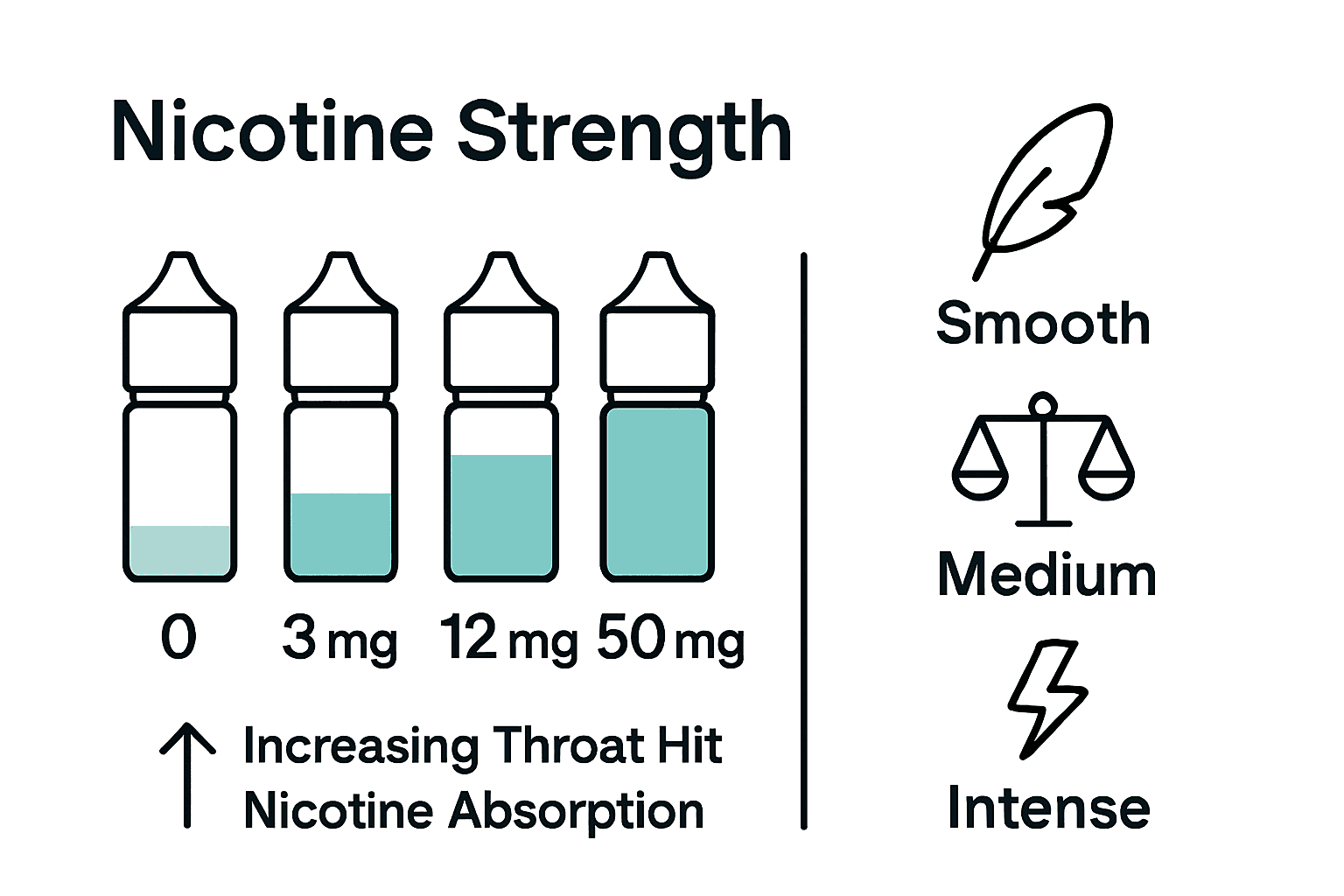 Lower strengths typically result in less immediate nicotine satisfaction but reduced risk of overwhelming sensations, while higher strengths provide more rapid nicotine absorption and a more pronounced throat hit. For those seeking personalized guidance, Nicotine Satisfaction: Complete Guide for Vapers offers comprehensive insights into selecting the optimal nicotine strength for individual preferences and needs.
Safety, Health Risks, and Best Practices
Navigating nicotine product safety requires a comprehensive understanding of potential health implications and responsible consumption practices. A 2020 study from arXiv highlighted critical concerns regarding carbonyl formation in electronic cigarettes, emphasizing the importance of monitoring nicotine strength and device quality to minimize potential health risks.
Health risks associated with nicotine consumption vary significantly based on concentration and consumption method. The research from the Chartered Institute of Environmental Health in 2024 underscored the growing trend of high-strength nicotine product usage and its potential public health implications.
Key safety recommendations for responsible nicotine consumption include:
- Start with lower nicotine strengths and gradually adjust
- Purchase products from reputable, regulated sources
- Understand individual tolerance and physiological responses
- Regularly monitor personal nicotine intake
- Store nicotine products safely, away from children and pets
- Use devices according to manufacturer instructions
Consumers seeking detailed guidance on selecting safe nicotine products can refer to How to Select Nicotine Products for Safe and Satisfying Use, which provides comprehensive insights into making informed and responsible choices about nicotine consumption.
Legal Regulations of Nicotine Strengths in Europe
European regulations on nicotine strengths represent a complex landscape of consumer protection and public health policy. According to the 2023 briefing by the National Centre for Smoking Cessation and Training, specific guidelines govern the maximum permitted nicotine concentration in e-liquids, ensuring consumer safety and standardizing product quality across different markets.
Regulatory frameworks in Europe typically impose strict limitations on nicotine strengths. The Wikipedia source on 6-Methylnicotine highlights the nuanced approach to classifying and regulating nicotine-containing products, with particular attention to emission values and potential hazardous substance classifications.
Key regulatory considerations for nicotine strengths include:
- Maximum nicotine concentration limits (typically 20 mg/ml)
- Mandatory product labeling requirements
- Child-resistant packaging specifications
- Quality control and testing standards
- Restrictions on marketing and sales to minors
- Reporting and notification requirements for manufacturers
Businesses and consumers navigating the European nicotine product market can find comprehensive insights in the Oral Tobacco Alternative: Complete Guide for Central Europe, which provides detailed information about regional regulatory nuances and compliance strategies.
Discover the Perfect Nicotine Strength for Your Vaping Experience
Understanding the role of nicotine strengths can be challenging when trying to find the right balance between satisfaction and safety. This article highlights common struggles like selecting appropriate nicotine concentrations, adapting to different product types such as freebase nicotine and nicotine salts, and managing health concerns. If you want to take control of your vaping journey with products tailored for comfort, taste, and regulatory compliance, we offer innovative solutions that meet those exact needs.

Explore a wide range of high-quality disposable vapes and smokeless nicotine alternatives at Official Alibarbar. Benefit from our commitment to safety, product performance, and cultural adaptation so you can vape confidently. Visit our Uncategorized Archives for insights on nicotine product types or start your selection process right now on our main site. Take the step toward personalized vaping choices designed for you today.
Frequently Asked Questions
What is nicotine strength in vaping products?
Nicotine strength refers to the concentration of nicotine in vaping products, measured in milligrams per milliliter (mg/ml) or as a percentage. It is crucial for users to choose the right nicotine strength based on their smoking history and personal preferences.
How do different nicotine strengths affect the vaping experience?
Different nicotine strengths influence user experience significantly. Lower strengths (3-6 mg/ml) provide a smoother throat hit, while higher strengths (20-50 mg/ml) deliver quicker nicotine satisfaction and a more intense throat hit, catering to heavy smokers.
What are the differences between freebase nicotine and nicotine salts?
Freebase nicotine has a harsher throat hit and is usually found in lower concentrations (3-6 mg/ml), while nicotine salts offer a smoother experience, allowing for higher strengths (18-50 mg/ml) and faster absorption, making them popular among heavy smokers.
What safety measures should I take when using nicotine products?
To ensure safe consumption, start with lower nicotine strengths and gradually adjust. Purchase from reputable sources, monitor your intake, and follow manufacturer instructions for device usage. Store nicotine products safely away from children and pets.
Recommended
- Nicotine Strength Explained: Complete Guide for Vapers – Official Alibarbar
- How to Select Nicotine Products for Safe and Satisfying Use – Official Alibarbar
- Nicotine Sales Strategy Guide for Maximizing Vape Revenue – Official Alibarbar
- How to Use Oral Nicotine Safely and Effectively – Official Alibarbar
