
Uncategorized
Nicotine Strength Explained: Complete Guide for Vapers

Oct
Did you know that over 30 percent of adult e-cigarette users misunderstand nicotine strength labels? Confusion over measurements like percentages and milligrams per milliliter leaves many vapers uncertain about what they are actually consuming. The right nicotine level is not just a technical detail. It shapes your satisfaction, health, and overall vaping experience. Knowing how to interpret labels and choose wisely helps you match products to your needs and keeps your choices safe and informed.
Key Takeaways
| Point | Details |
|---|---|
| Understanding Nicotine Strength | Different measurement formats (percentage vs mg/ml) can lead to confusion; know your needs based on smoking history and tolerance. |
| E-Liquid Types | Key categories include Freebase Nicotine, Nicotine Salt, and Zero Nicotine, each catering to different preferences and experiences. |
| Health and Safety | Monitor nicotine intake carefully, utilize quality devices, and educate on potential risks, especially for younger users. |
| Regulatory Compliance | The EU TPD sets strict guidelines for nicotine products; awareness of local regulations is essential for consumers and manufacturers. |
Table of Contents
- Nicotine Strength Defined And Common Misconceptions
- Product Categories: E-Liquids And Alternatives
- Effects Of Nicotine Strength On Vaping Experience
- Health, Safety, And Dosage Considerations
- Legal Limits And Eu Regulatory Compliance
Nicotine Strength Defined and Common Misconceptions
Understanding nicotine strength can feel like navigating a complex maze for many vapers. According to research published in the PubMed Central database, adult e-cigarette users frequently misinterpret nicotine concentration labels, especially when confronted with different measurement formats like percentages and milligrams per milliliter (mg/ml).
The primary sources of confusion stem from inconsistent labeling practices and a lack of standardized communication about nicotine concentration. Most vaping products display nicotine strength using two primary methods: percentage (%) and milligrams per milliliter (mg/ml). These measurements might seem similar, but they communicate different information that can dramatically impact your vaping experience. Percentage represents the proportion of nicotine in the total volume, while mg/ml indicates the precise nicotine content in each milliliter of liquid.
To help you navigate this landscape, here are some key insights about nicotine strength:
- Low Strength: 0-6 mg/ml (ideal for light smokers or those transitioning away from nicotine)
- Medium Strength: 6-12 mg/ml (suitable for moderate smokers)
- High Strength: 12-20 mg/ml (recommended for heavy smokers or those with strong nicotine dependency)
Choosing the right nicotine strength isn’t just about numbers—it’s about understanding your personal needs, smoking history, and desired vaping experience. Your ideal nicotine level depends on factors like previous tobacco consumption, nicotine tolerance, and individual physiological responses. Always start lower and adjust gradually to find your perfect balance.
Product Categories: E-Liquids and Alternatives
The world of nicotine delivery systems has expanded far beyond traditional cigarettes, offering adult consumers a diverse range of products designed to meet varying preferences and lifestyle needs. E-liquids remain the cornerstone of the vaping experience, representing a sophisticated and customizable nicotine consumption method that allows users to control their nicotine intake with unprecedented precision.
E-liquids typically come in three primary composition categories, each offering unique characteristics:
- Freebase Nicotine: The traditional nicotine format, providing a strong throat hit and faster absorption
- Nicotine Salt: A smoother delivery method with higher nicotine concentrations, mimicking the sensation of traditional smoking
- Zero Nicotine: Designed for individuals seeking the sensory experience without nicotine content
Beyond e-liquids, the market has evolved to include innovative alternative nicotine products that cater to different consumption preferences. These alternatives include nicotine pouches, heated tobacco devices, and oral nicotine products that provide discrete and potentially less harmful nicotine experiences. Each product category offers unique advantages, allowing consumers to select options that best align with their personal habits, social environments, and health considerations.
When exploring these product categories, consider factors like convenience, flavor variety, nicotine absorption rate, and personal comfort. The key is finding a solution that not only satisfies nicotine requirements but also provides an enjoyable and personalized experience that supports individual transition goals.

Here’s a summary of common e-liquid types and their characteristics:
| E-Liquid Type | Nicotine Form | Typical Strength Range | Key Features |
|---|---|---|---|
| Freebase Nicotine | Freebase | 0-20 mg/ml | Strong throat hit Faster absorption |
| Nicotine Salt | Salt-based | 10-20 mg/ml | Smoother hit Higher nicotine possible |
| Zero Nicotine | None | 0 mg/ml | No nicotine Pure flavor focus |
Effects of Nicotine Strength on Vaping Experience
The nicotine strength in your e-liquid fundamentally transforms your entire vaping experience, acting as a critical factor that influences satisfaction, throat hit, and overall sensory perception. Recent research from University College London reveals a significant trend among vapers, with high-strength e-liquids (≥ 20 mg/ml) dramatically increasing from approximately 3.8% to 32.5% between July 2016 and January 2024, indicating a clear consumer preference for more potent nicotine formulations.
Nicotine strength directly impacts several key aspects of vaping:
- Throat Hit Intensity: Higher nicotine concentrations produce a more pronounced, sharper sensation
- Craving Satisfaction: Stronger nicotine levels provide more immediate and comprehensive nicotine delivery
- Vapor Production: Lower nicotine strengths typically generate more substantial vapor clouds
- Flavor Perception: Nicotine concentration can subtly alter or mute underlying flavor profiles
Interestingly, the UCL study highlighted that higher strength e-liquids were particularly prevalent among disposable vape users and younger adult consumers. This suggests a nuanced relationship between nicotine strength, device type, and user demographics. The choice of nicotine strength is deeply personal, influenced by factors like previous smoking habits, nicotine tolerance, and individual physiological responses.
Navigating nicotine strength requires thoughtful experimentation.
Start with lower concentrations and incrementally adjust to find your optimal balance. Remember, the goal is not just nicotine delivery, but creating an enjoyable, personalized vaping experience that supports your individual needs and preferences.
Health, Safety, and Dosage Considerations
Navigating the health implications of nicotine consumption requires careful understanding and responsible usage. According to cardiologists from the European Society of Cardiology, high-level nicotine exposure poses significant risks, particularly for developing brains and cardiovascular systems in younger users. The potential consequences include increased stroke risk and arterial stiffness, underscoring the critical importance of informed and measured nicotine consumption.
Key safety considerations for responsible nicotine use include:
- Age Restrictions: Strictly limit access to adults over legal purchasing age
- Dosage Awareness: Carefully monitor and control nicotine intake levels
- Device Quality: Use only certified, regulated vaping devices
- Storage Safety: Keep nicotine products secured and away from children
Research highlights a concerning trend of mislabeling and misunderstanding of nicotine strength, which can lead to inadvertent high intake. This risk is particularly pronounced among youth, who may not fully comprehend dosage labeling or understand the potential health implications. Responsible users should:
- Start with lower nicotine concentrations
- Gradually adjust based on individual tolerance
- Regularly assess personal nicotine consumption
- Consult healthcare professionals for personalized guidance
Ultimately, health and safety in nicotine consumption demand a proactive, informed approach. While alternative nicotine products offer potential harm reduction compared to traditional smoking, they are not without risks. Personal responsibility, continuous education, and mindful consumption remain the most critical factors in maintaining overall health and well-being.
Legal Limits and EU Regulatory Compliance
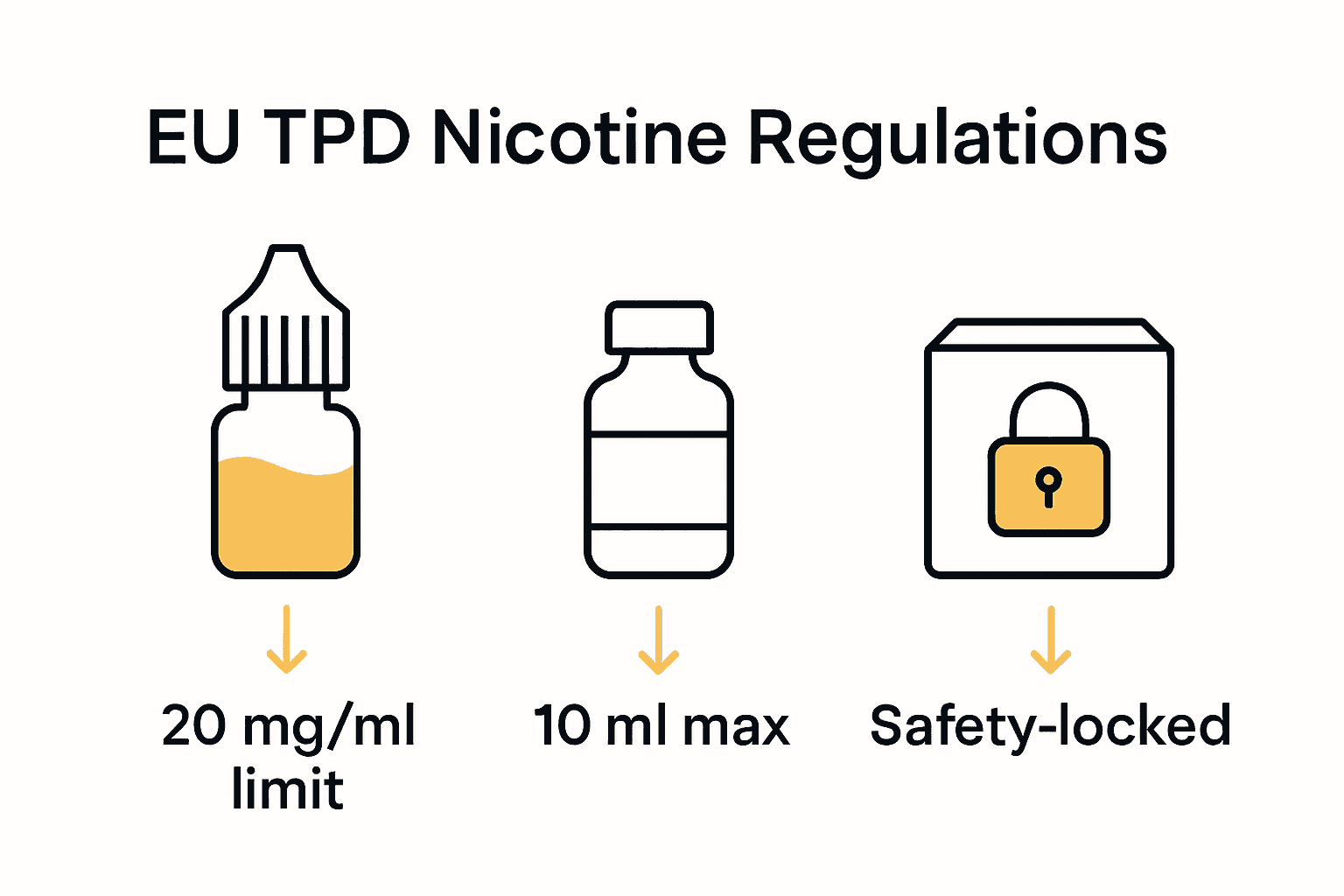
The European Union’s Tobacco Products Directive (TPD 2014/40/EU) represents a comprehensive regulatory framework that establishes critical standards for nicotine and vaping products across member states. This pivotal legislation sets precise parameters designed to ensure consumer safety, product quality, and responsible marketing of electronic cigarettes and related devices.
Key regulatory requirements under the TPD include:
- Nicotine Concentration Limit: Maximum of 20 mg/ml
- Container Volume Restrictions: 10 ml for e-liquids, 2 ml for tanks/cartridges
- Safety Packaging: Child-resistant mechanisms mandatory
- Comprehensive Labeling: Detailed health warnings and ingredient disclosures
- Pre-Market Notification: Manufacturers must submit detailed product information
Interestingly, while the TPD establishes EU-wide minimum standards, individual member states retain the flexibility to implement more stringent regulations. A prime example is Belgium, which introduced additional restrictions including e-liquid taxation and a complete ban on disposable vapes effective January 2025. This demonstrates the dynamic and evolving nature of vaping regulations across European jurisdictions.
For businesses and consumers, navigating these complex regulatory landscapes requires ongoing vigilance and commitment to compliance. Understanding that regulations can vary significantly between countries, staying informed about local and regional legal requirements is not just recommended—it’s essential.
 Importers, manufacturers, and retailers must continuously monitor regulatory changes to ensure their products meet the most current safety and legal standards.
Take Control of Your Nicotine Experience with Alibarbar
Struggling to find the right nicotine strength? You are not alone. Many vapers face uncertainty when choosing products that match their needs, especially with confusing labels and ever-changing regulations. Our article breaks down the basics, but the journey to a satisfying and safe vaping experience starts with choosing trusted products tailored to your preferences. For even more guidance and options, explore our Uncategorized Archives, packed with expert resources and product updates.

At officialalibarbar.com, your perfect vape is just a click away. Browse our curated selection of advanced disposable vapes and smokeless nicotine alternatives that prioritize both safety and satisfaction. We provide a variety of nicotine strengths so you can customize your experience with confidence. Take the next step today and discover flavorful innovation, compliance you can trust, and a world of options to help you vape smarter—not just stronger. Visit us now and set yourself up for a better vaping journey.
Frequently Asked Questions
What does nicotine strength mean in vaping?
Nicotine strength refers to the concentration of nicotine in e-liquids, usually measured in milligrams per milliliter (mg/ml) or as a percentage (%). It impacts the vaping experience by influencing throat hit, satisfaction levels, and overall enjoyment.
How do I determine the right nicotine strength for my needs?
Choosing the right nicotine strength depends on your smoking history, nicotine tolerance, and personal preferences. It’s recommended to start with a lower strength and gradually adjust until you find a level that satisfies you without causing discomfort.
What are the different types of e-liquids based on nicotine strength?
E-liquids generally fall into three categories based on nicotine strength: Freebase Nicotine (0-20 mg/ml), Nicotine Salt (10-20 mg/ml), and Zero Nicotine (0 mg/ml). Each type offers different throat hit sensations and absorption rates, catering to various preferences.
How does nicotine strength affect the vaping experience?
Nicotine strength significantly influences throat hit intensity, craving satisfaction, vapor production, and flavor perception. Higher nicotine concentrations provide a sharper throat hit and quicker satisfaction, while lower concentrations tend to produce more vapor and nuanced flavors.
